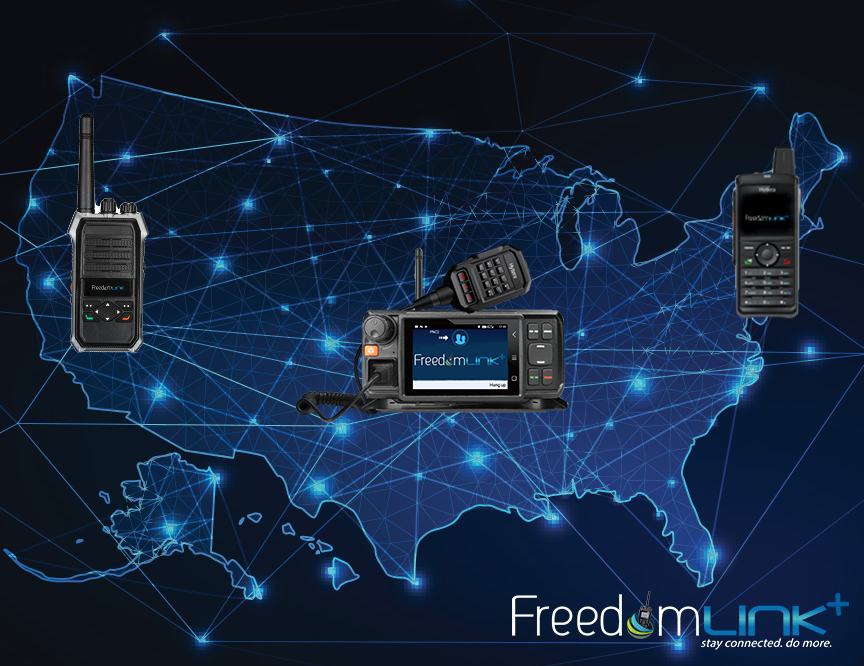
When it comes to instant, team-wide communication, two technologies stand out: Push-to-Talk over Cellular (PoC) and traditional two-way radios. While both offer push-button simplicity for voice communication, they differ significantly in how they operate, their range, and the features they offer.
In this blog, we’ll break down the differences to help you decide which solution is the best fit for your organization.
What Is PoC (Push-to-Talk over Cellular)?
PoC is a modern communication system that uses cellular data or Wi-Fi to transmit voice messages instantly—just like a walkie-talkie, but without range limitations. It operates through mobile apps or dedicated PoC radios, offering flexible, wide-area communication without the need for radio towers or FCC licenses.
What Are Traditional Two-Way Radios?
Traditional two-way radios (often called LMR, or Land Mobile Radio) use radio frequencies to send voice signals between devices. These systems typically work within a limited range unless boosted by repeaters and rely on radio infrastructure. They're known for reliability in off-grid or rural areas.
Key Differences at a Glance
| Feature | PoC Radios | Two-Way Radios |
|---|---|---|
| Coverage | Nationwide (or global) via cellular/Wi-Fi | Localized; limited to RF signal range |
| Infrastructure | Uses cellular networks; no repeaters needed | Requires repeaters and radio towers |
| Licensing | No FCC license required | Often requires FCC licensing |
| Devices | Smartphones, tablets, PoC radios | Dedicated radio hardware |
| Features | GPS, text, video, emergency alerts | Primarily voice-only |
| Scalability | Easy to add users and groups | Adding users requires more hardware |
| Network Reliance | Dependent on cellular/internet connection | Independent of public networks |
| Latency | Slight delay due to data transmission | Minimal delay |
| Ongoing Costs | Monthly service fees | Few ongoing costs after setup |
When to Choose PoC
- You need nationwide or multi-site coverage.
- Your teams already use smartphones or tablets.
- You want additional features like GPS tracking, text messaging, and cloud-based group management.
- You need a scalable, low-maintenance solution without radio tower infrastructure.
PoC is a perfect fit for logistics, transportation, security, and companies with mobile workforces spread across large areas.
When to Choose Two-Way Radios
- You operate in remote areas with weak or no cellular coverage.
- You need simple, direct communication on a local site (e.g., a warehouse, factory, or construction zone).
- You prefer a one-time investment without ongoing service costs.
- You require instant communication without relying on network availability.
Two-way radios remain the go-to option for industries like manufacturing, construction, and event security where reliability and low latency are critical.
Which One Is Right for You?
The choice between PoC and traditional two-way radios depends on your environment, mobility, and communication needs. In many cases, businesses are turning to PoC for its flexibility, modern features, and nationwide reach—while still keeping a few two-way radios on hand for local operations.
Need help finding the right communication solution? Contact us today to explore PoC, traditional radios, or hybrid systems that fit your team’s unique needs.